Oolong Tea: Origin, Production, and Why It's Ideal for Sparkling Tea
Oolong refers to a category of high-quality teas with floral aromatics, gentle sweetness, and a complex structure. As a partially oxidized tea – historically often called "semi-fermented" – Oolong tastes somewhere between green tea and black tea. It combines the freshness of green teas with the depth of more highly oxidized black teas.
Particularly high-quality Oolong comes from Taiwan and is considered a premium tea with a distinct terroir character.
Oolong describes a style with partial oxidation, which gives it, among other things, the following characteristics:
- light fruit notes
- smooth mouthfeel
- complex structure
- long, elegant finishes
How is Oolong Tea Produced and Why is the Oxidation Process Crucial?
The production of Oolong tea is particularly precise and labor-intensive. The degree of oxidation largely determines the aroma profile.
1. Plucking
Only selected young tea leaves are harvested and processed for high-quality Oolong teas.
2. Withering
The freshly picked leaves first lose some of their moisture, developing initial aromatic precursors.
3. Initiating Oxidation
Gentle rolling or shaking opens up cell structures. Oxygen reacts with the leaves' natural enzymes, starting the oxidation process and creating complex aromas.
4. Stopping Oxidation
Heat is applied to fix the desired degree of oxidation and stop the process.
5. Rolling and Drying
Finally, the leaves are shaped and dried. The shape of the leaves later influences the extraction and mouthfeel in the infusion.
The degree of oxidation is a major determinant of floral depth, natural sweetness, structure, and complexity. A precisely processed Oolong tea develops a harmonious interplay of floral aromas, freshness, and elegant texture.
These properties also make it particularly interesting for food pairing and sparkling tea.
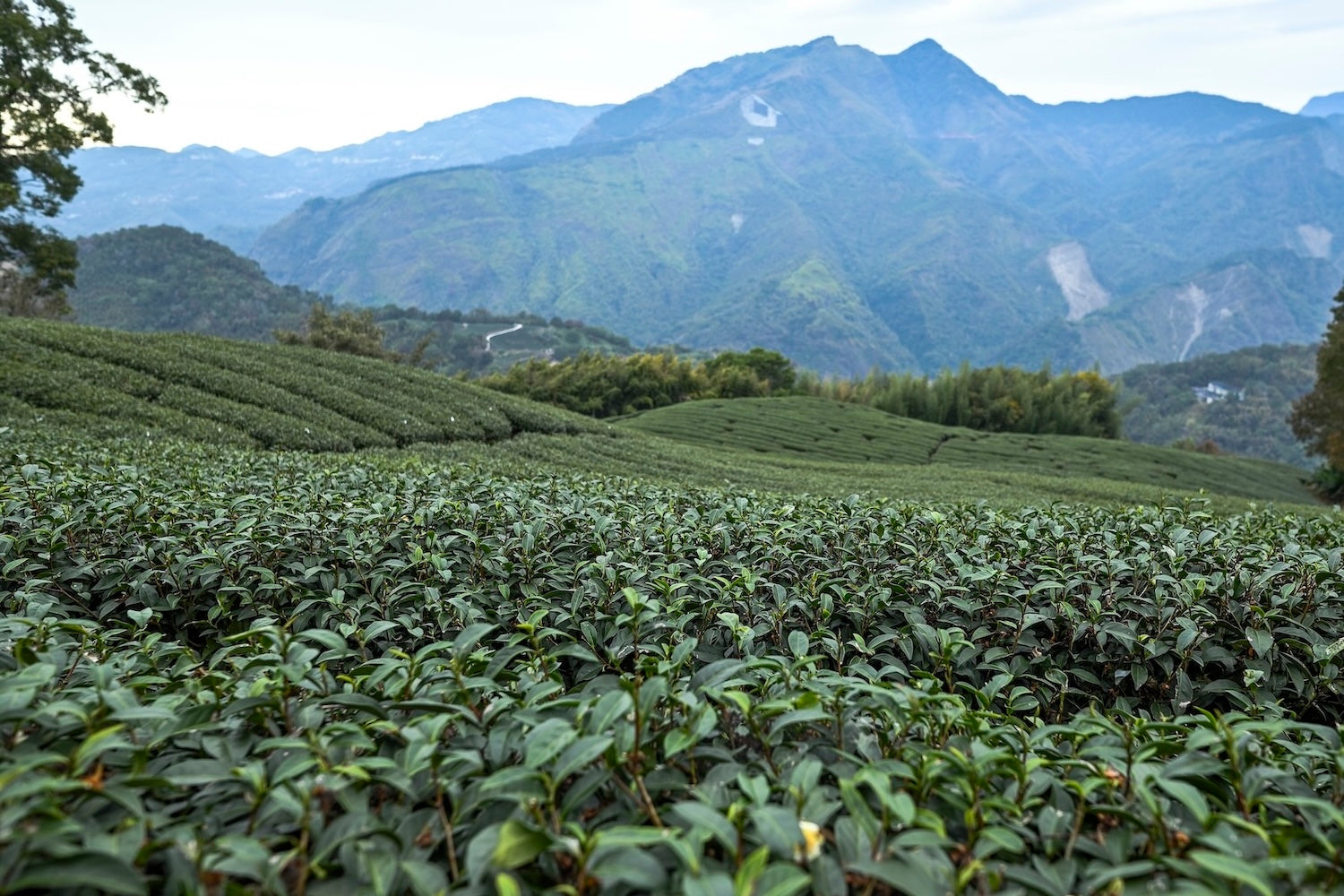
Where Does High-Quality Oolong Tea Come From, and Why is Nantou Considered a Top Growing Region?
Those looking for high-quality Oolong tea often come across Taiwan. The Nantou region in the center of the island is particularly well-known.
Oolong tea has been cultivated here since the 19th century. The tea gardens are often located at higher altitudes with:
-
fertile, mineral-rich soils
-
subtropical climate
-
regular rainfall
-
significant temperature differences between day and night
These conditions promote slow leaf growth, allowing complex aromatic compounds to develop. The growing region – often referred to as terroir – decisively influences taste, structure, and quality. High-mountain Oolong from Nantou is considered a global benchmark for floral elegance, balance, and aromatic depth.
How Does Oolong Tea Taste, and What Aromas are Typical?
Oolong tea impresses with a multifaceted aroma profile. Typical notes include:
-
floral nuances (e.g., orchid or white blossoms)
-
light citrus notes
-
fine minerality
-
subtle, natural sweetness
-
creamy, smooth mouthfeel
Compared to green tea, Oolong usually appears more structured and less grassy. Compared to black tea, it appears lighter, fresher, and more elegant.
How to Properly Prepare Oolong Tea?
For balanced extraction, the following parameters are recommended:
- Water temperature: 80–90 °C
- Steeping time: 2–3 minutes
- Multiple infusions: possible
Water that is too hot can mask delicate aromas. Controlled preparation preserves the floral nuances and ensures a harmonious balance between structure, sweetness, and freshness.
Why is Oolong Tea Ideally Suited for Sparkling Tea?
The aromatic depth, fine structure, and smooth mouthfeel make Oolong tea an excellent base for Sparkling Tea.
Sparkling Tea combines:
-
cold-extracted teas
-
precise acidity balance
-
fine perlage
-
dry style
Oolong contributes floral freshness, complexity, and texture to the blend – qualities often only found in high-quality wines.
In the context of modern non-alcoholic alternatives, structure plays a crucial role. Oolong tea provides exactly this structure: without alcohol, but with depth, length, and culinary relevance.
It is therefore ideal as:
-
non-alcoholic aperitif
-
food accompaniment in fine dining
-
alternative to wine
-
elegant companion at business events
FAQ: Frequently Asked Questions About Oolong Tea
What Does Oolong Tea Mean?
Oolong refers to a category of partially oxidized teas that taste between green and black tea.
Is Oolong Tea Fermented?
No. Oolong is partially oxidized (historically often called "semi-fermented"). The aroma development results from oxidation, not microbial fermentation.
Where Does Your Oolong Come From?
Our Oolong comes from the Nantou region in Taiwan, a renowned high-mountain growing area.
Does Oolong Tea Contain Caffeine?
Yes. Oolong contains natural caffeine, usually in moderate concentration.
Why is Oolong Well Suited for Sparkling Tea?
Due to its floral aromatics, structure, and balance between freshness and sweetness, Oolong is excellently suited as a complex base for high-quality non-alcoholic sparkling tea cuvées.
To our Oolong Orange